Amazing music speaks for itself.
Take a look at a selection of my recent projects, crafted with care and designed to make an impact. Each one tells a story of creativity, collaboration, and results.
Neuma Records
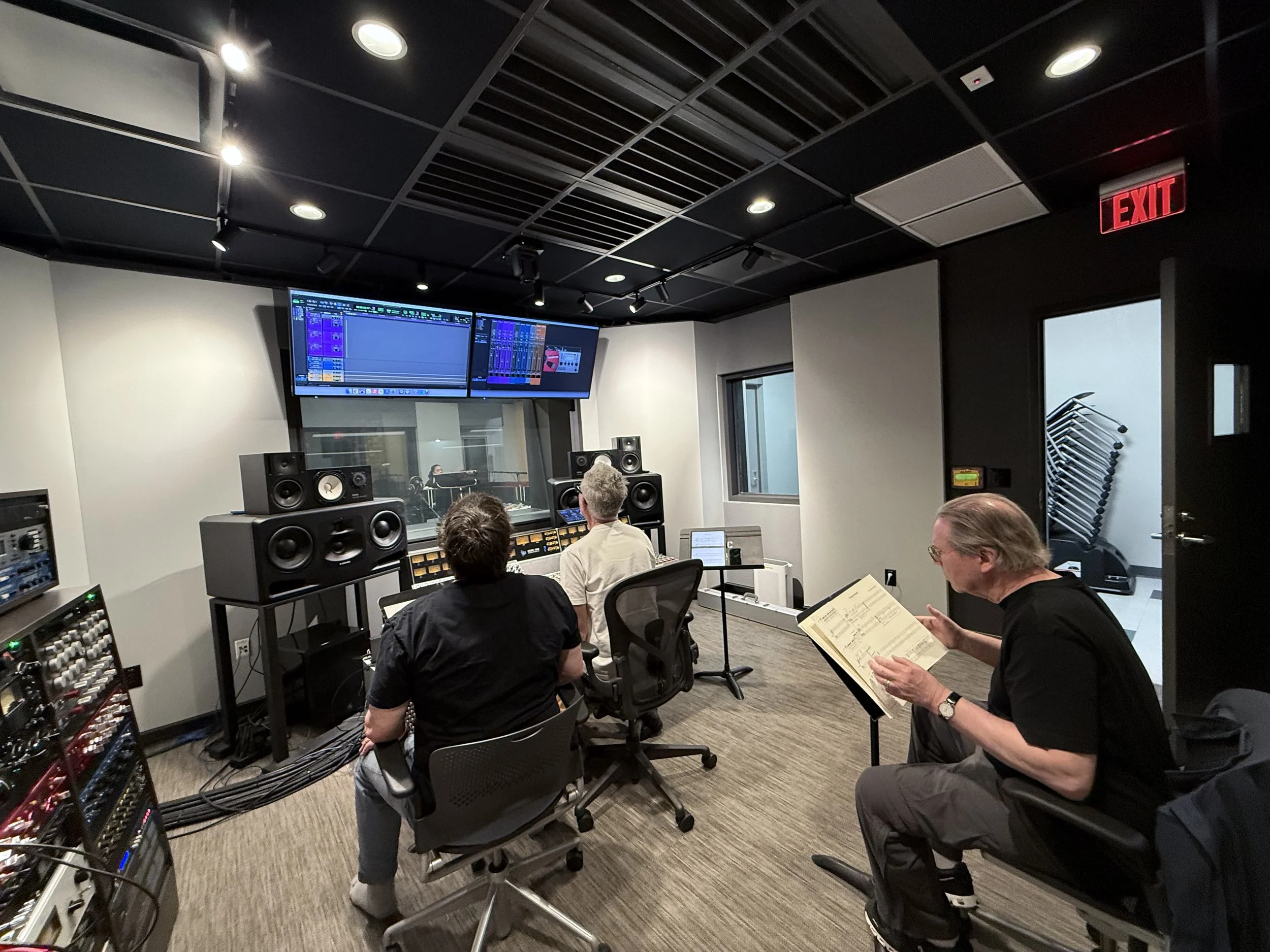
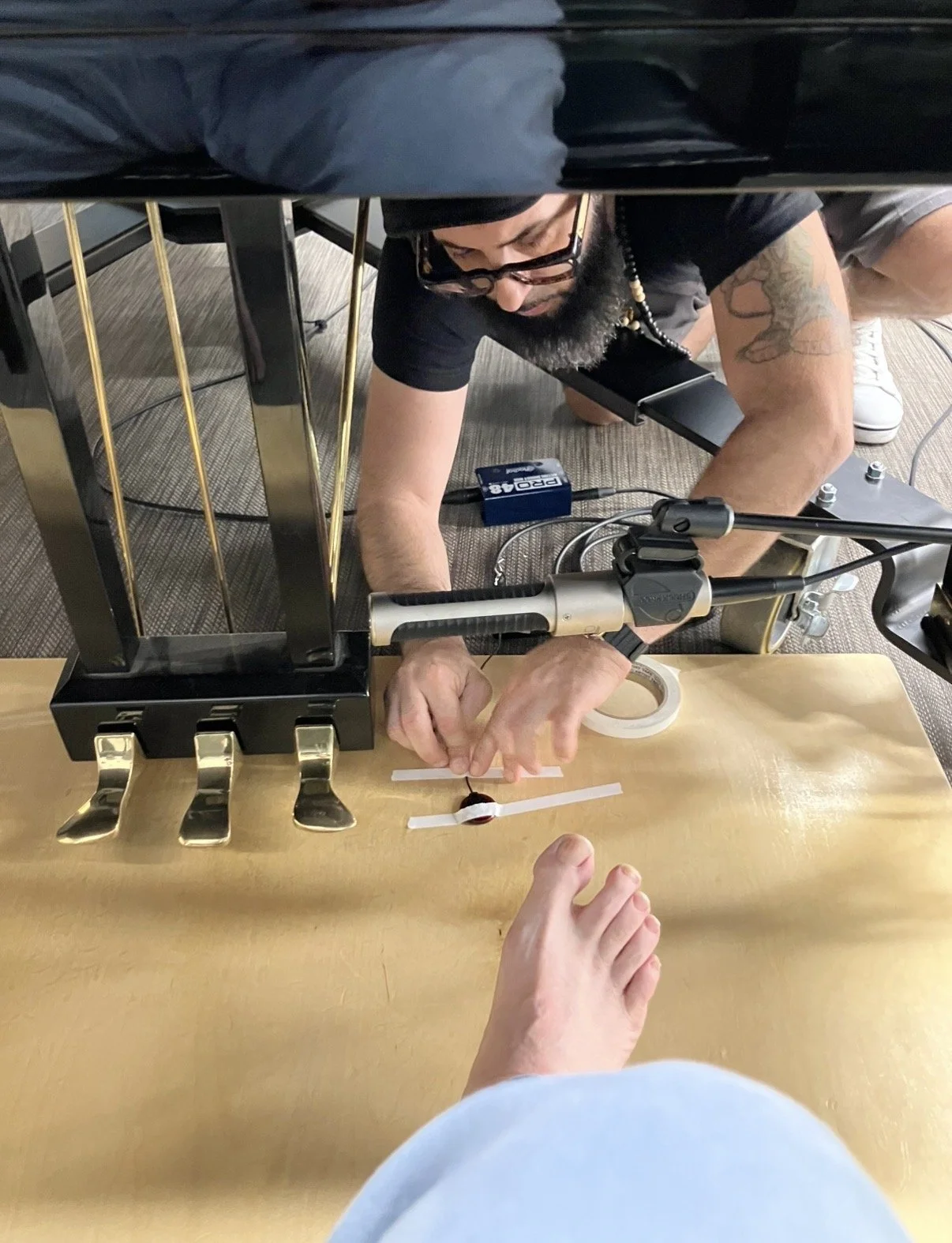
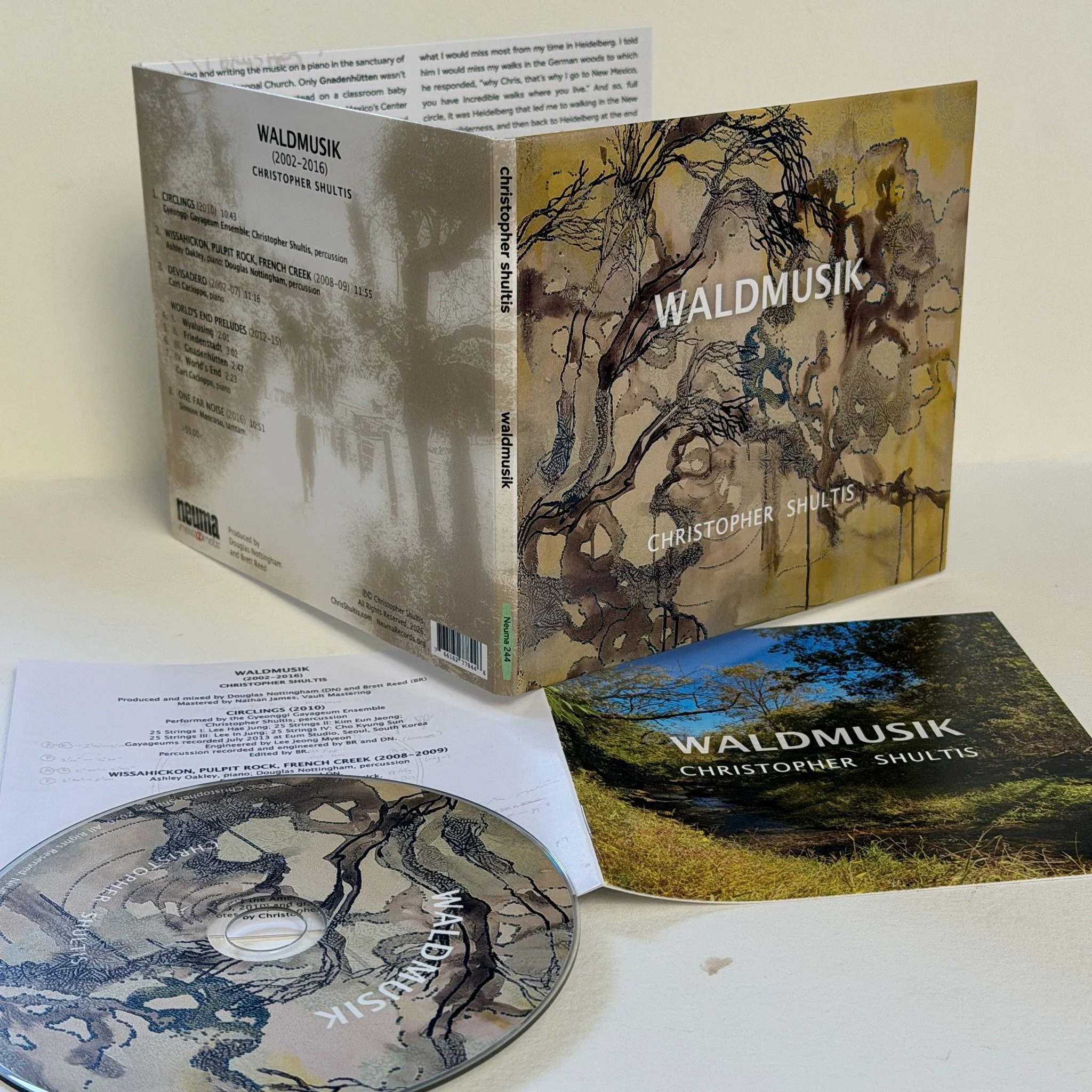
The pieces on this recording go under the collective title of Waldmusik (2002–2016). Meet composer Christopher Shultis, who makes his Fanfare debut here. The inspiration for the overall title comes from text associated with a piece for flute and percussion called Waldmusik: “walking in woods / listening / what I hear … / let’s see what happens.” What happened then is interesting: the flute and piano piece never got finished; but the concept lived on. Like Schubert and so many Romantic composers, forests, so often symbols of the unconscious, became a fascination for Shultis. Decades of walking and listening (while “sauntering”) have resulted in this collection of sounds before us. The pieces are not presented in chronological order (it was Devisadero that came first, in 2002). Instead, we start with Circlings (2010). A keen ambler, Shultis has only got lost on a couple of occasions. One is depicted in this piece. During those occasions, “in the woods, all directions, seemed the right ones.” Circling does include the sounds of mountains in South Korea, and so the sound of water, of insects, and chatting Buddhist monks are all part of the soundscape. For the result we hear, Shultis was assisted by Thomas DeLelio (whose music made quite an impression on me via another Neuma release: Fanfare 43:2): the woodblocks and the gayageums (a traditional Korean zither) were thus transformed into a personal language. The piece opens with bells, a call to prayer perhaps. The piece becomes more and more animated, the gayageums interrupted by monks chanting and sounds of the forest. It is a remarkable collective sound: the piece is described as for “video, gayageums, and electronics,” but sadly this is an audio-only experience. The forest sounds become intense, an almost threatening mélange of hissing and buzzing; the gayageums become more and more out of sync. The Neuma Soundcloud of this disc has a hashtag (among others) of #soundwalk, and that describes the concept and realization well. Notice, too, the use of silence to near-silence here, a vital component of Shultis’s Orientalist influences. The players on the recording of the 25-string gayageums are: Lee Hae Jung, Kim Eun Jeung, Lee In Jung, and Cho Kyung Sun. The composer performs the percussion component himself; the result is masterly. Written just prior to Circlings, Wissahickon, Pulpit Rock, French Creek (2008/9) is scored for piano and percussion. The title refers to parts of the Pennsylvania woods and the Appalachian Trail (which extends from near Boston down to near Atlanta). “Wissahickon” is a creek just outside Philadelphia; “Pulpit Rock” is on the Appalachian Trail’s highest point in Pennsylvania; French Creek is in Pennsylvania and holds another path well-hoofed by the composer, the Mill Creek Trail. Scored for percussion, piano, and field recording, the music here is more immediately primal, forceful piano gestures and clusters hammered out rhythmically. The sonority of the piano is foregrounded, emphasizing resonances (which seem somehow to emphasize the silence around them when held with the sustaining pedal down). The performance is magisterial: Ashley Oakley is a phenomenal pianist, whether in overtly virtuoso passages to single-line statements. She is joined by Douglas Nottingham on percussion. Interestingly, Oakley has collaborated previously with Phillip Glass, and Shultis seems to make reference to that composer in his piece, around 5:30 in, not long before we hear the sound of the composer’s feet, walking, and the sound of a siren going off against obsessively repealed chords on piano. It is good to see the name of Curt Cacioppo here: I have waxed lyrical about his compositions previously, starting with an Albany disc that included his Third Symphony (Fanfare 44:2), a disc of his string quartet music on Orienda (46:1), and a Navona disc of music inspired by Venice and Sicily (44:5). But in the present instance, he is a performer, first on Devisadero (2002–07, commissioned by Cacioppo), its title another trail (just outside Taos). A set of six preludes, it is headed by a quote by Michael Ondaatje: “with memory, with the reflection of an echo, a gate opens both ways. We can circle time.” Shultis did the trail twice, 2002 and 2007 (hence the dates), noticing that the second enhanced his understanding of snippets of illumination gleaned on the first. The six preludes invoke nature explicitly in their titles, and implicitly in the music, while the first title quotes from John in the Bible: “Walking (Walk while you have the light, lest darkness overtake you).” Cacioppo’s playing is faultless; Shultis’s writing is inspired, particularly, I would argue, from an harmonic angle (both in harmonies chosen and their unfoldings). Cacioppo plays this music “from the inside.” The actual recording is quite close; personal preference will have to part to play here, but it works for me. Worth noting, the piano is beautifully prepped, the upper reaches crystal clear and in tune. The first of the World’s End Preludes (2012–15) seems to nod to Glass again, but textures accrue in a decidedly non-Glassian way. Here, it is a quote from the Biblical Psalms that heads the score: “Your praise, like your name, O God, reaches to the world’s end, your right hand is full of justice.” A trifle disappointingly, nothing to do with the famous Camden (London) pub The World’s End, then. “Friedenstadt” (City of Peace) has an Orientalist-Impressionist tinge; it is written after a place of displaced settlement. The music includes quotations from Moravian hymns (reflecting the enforced conversion of the Lenope people to Christianity). The snippets are forthright, but somehow maximally insubstantial. “Cabins of Grace” pits a tolling single note, high up, with sounds from inside the piano, tappings, and interruptive clusters: another settlement was called “Gnadenhütten,” and here the piece takes the English translation of that, “Cabins of Grace.” This movement is a result of the composer’s pilgrimage to the town of Gnadenhütten (which still exists) and the slaughter that took place there. Cacioppo once again gets the piece, from top to bottom. Finally, One Far Noise (2016, for tam-tam and electronics), with Simone Mancuso (for whom it was written) on tam-tam. The quote comes from a piece by author-poet Thomas Merton, “to have the only one far noise is not equivalent to silence.” Most of the source material used here comes from a walk in the Odenwald (near Heidelberg, Germany), heard explicitly only at the end (a “concert of birds”), except for some birdsong caught while at his desk. If the use of the tam-tam sounds oh-so-Stockhausenisch, then it’s not misleading, at least at the opening. Indeed, a vital component of the piece is interruptions of resonances. The world of Mikrophonie I is never far away, although Stockhausen’s canvas is more vast. Shultis’s tam-tam cacophony (or so it threatens to be pre-interruption) cedes to that tranquil bird song, so present it could be from a tropical rainforest, not Heidelberg. There are some vocalisms from the performer that almost sound pre-linguistic, phonemic, not morphemic, an animal trying to express him/itself; the subsequent ticking implies perhaps time will change all of this. But does it mean the sounds will develop, so that our time is limited, finite? Who knows. Fascinating sounds from a composer of vivid, seemingly infinite imagination. The music is perfectly explained in terms of documentation and the whole production exudes class.
by Colin Clarke, Issue 49:5 (May/June 2026) of Fanfare Magazine.